
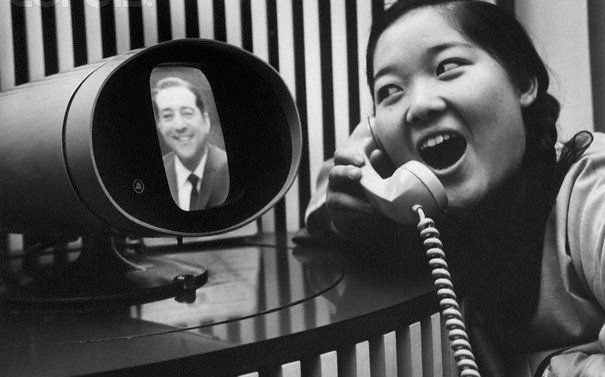
On April 20th, 1964, at the World’s Fair in Flushing Meadows Park, Bell Telephone exhibited the Mod 1 Picturephone, a predecessor to modern video calling applications Skype and FaceTime.
At the exhibit, visitors were able to experience a face-to-face video conversation with a person thousands of miles away. The tiny display video offered a jaw-dropping 30 frames per second (FPS), black-and-white feed. At the time, fair attendees were impressed by their first glimpse into the future of webcam telephony. Unfortunately, AT&T’s $5.3 per minute video calling service was far too expensive for the average consumer, making the Mod 1 Picturephone an instant flop.
Today, the market narrative for such devices remains similarly bleak. Although face-to-face video conferencing has long captivated the imagination of sci fi writers all over the world, such devices have yet to gain popularity as a desired form of communication, even though such features are today inexpensive, fit in the palm of your hands, and built into nearly every computer.
The late David Foster Wallace, in his magnum opus, Infinite Jest, provides several hilarious opinions regarding the superiority of voice-only telephony and the faults of the videophone.
Editorial note for this restored edition: the original article included an extended excerpt from David Foster Wallace’s Infinite Jest (Back Bay Books). The excerpt is replaced here with a brief summary.
Summary: Wallace’s fictional account suggests that video calls expose distractions that voice calls can conceal. Being visible makes callers more conscious of their appearance and of how attentively they seem to listen, turning an apparently convenient technology into a source of social discomfort.