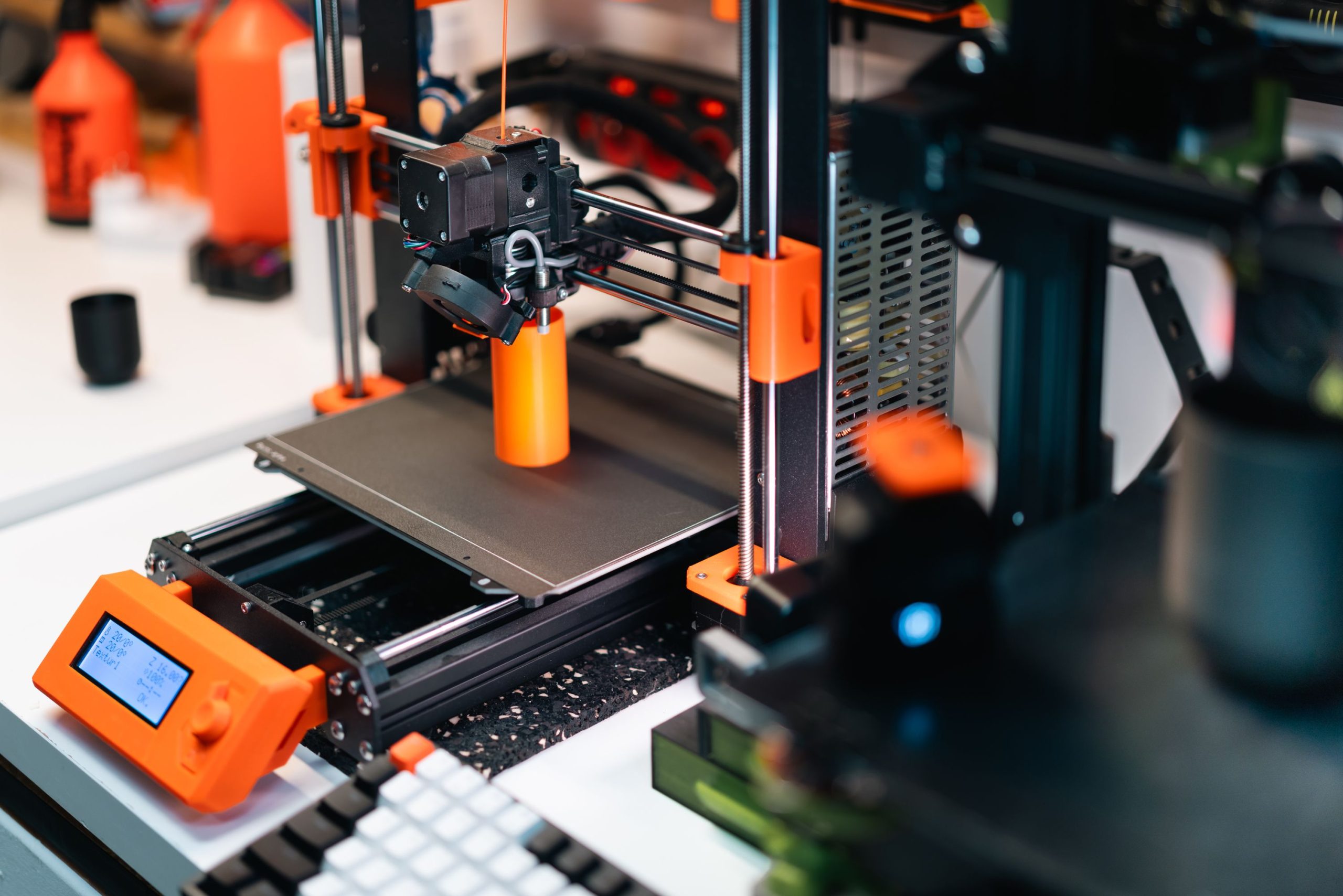
Formlabs: Leaders in Desktop 3D Printing
Professional-quality 3D printing used to mean one of two things. A machine that cost more than most cars, or a service bureau you shipped your files to and waited on.
Designers and engineers who wanted real precision on their own desk just didn’t have that option.
Formlabs was one company that decided to close that gap. Not the only one, but arguably the one that made it stick.
What Is Formlabs?
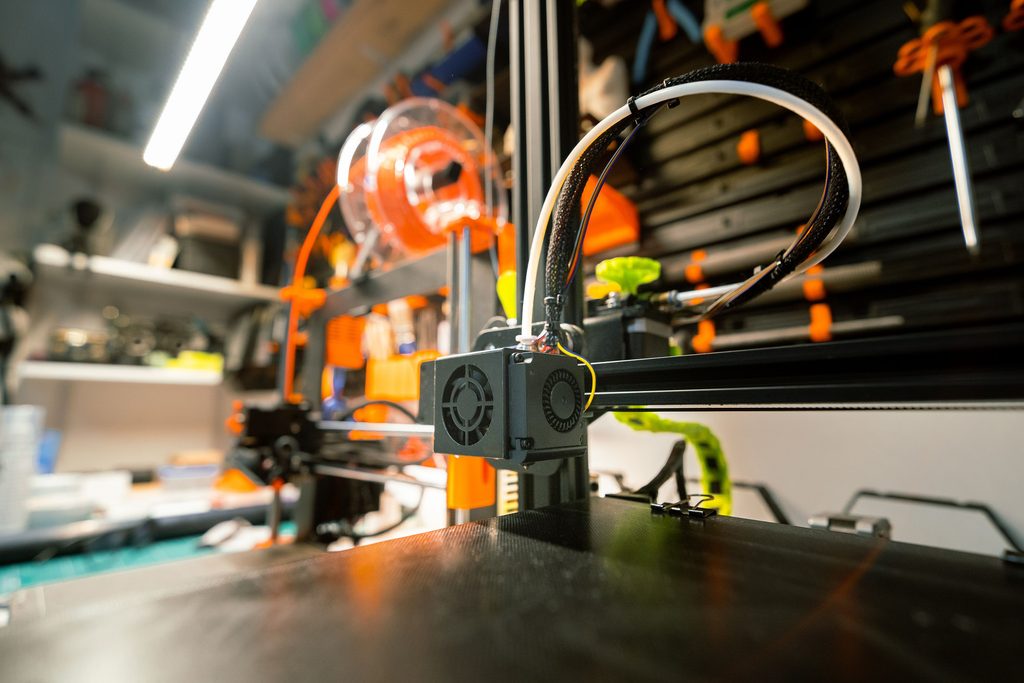
Short version: Formlabs builds 3D printers, the SLA kind first, SLS later on. Plus the resins, powders, and software that make those machines actually usable day to day.
Three MIT Media Lab students started it, back in September 2011, in Somerville, Massachusetts.
Maxim Lobovsky, Natan Linder, and David Cranor — that’s the trio. They met in a class called “How to Make (Almost) Anything,” which honestly sums up what they went on to do better than any mission statement could.
Their goal wasn’t vague startup ambition, either. Stereolithography had been locked inside expensive industrial machines for decades.
They wanted to shrink it down to something one designer could own and run alone, no technician required. Desktop 3D printing barely existed as a category before them. It became one largely because of what they shipped.
Why Desktop 3D Printing Was Difficult
Here’s the problem they were up against. Professional SLA and SLS machines cost tens or hundreds of thousands of dollars, sometimes brushing up against a million.
You didn’t just buy one, either. You usually needed a trained technician on staff to run it.
That kind of cost made sense for aerospace companies and big manufacturers. It made zero sense for an industrial designer working out of a small studio, or an engineering student trying to prototype something on a Tuesday.
Meanwhile, cheap desktop printers did exist. Just not the good kind.
Early consumer machines used FDM, melting plastic filament layer by layer. That got a lot cheaper, but it also got a lot rougher — visible layer lines, limited detail, parts that looked like what they were: a hobbyist print, not a professional one.
So there was a real gap between “hobbyist enough to be cheap” and “professional enough to be useful.” Nobody had built a bridge across it yet. That’s the gap Formlabs was aiming at.
How Formlabs Started
The MIT Connection
All three came out of the Media Lab, and two of them had also spent time in MIT’s Center for Bits and Atoms Fab Lab program.
That’s a place built almost entirely around making things, fast, as part of the actual research process rather than after it. Honestly, hard to think of a better environment for someone to notice a gap this specific.
The Founding Team
Lobovsky wasn’t starting cold. He’d already worked on Fab@Home at Cornell, one of the earliest open-source desktop 3D printing projects around.
Linder and Cranor showed up with their own MIT engineering backgrounds. This wasn’t three people guessing at what desktop 3D printing needed — they’d been living inside the problem for a while already.
The Idea Behind Form 1
Easy to say, hard to pull off: get SLA-level resolution down onto a desktop machine, at a fraction of what industrial versions cost.
Not “good enough for messing around at home.” Good enough that an actual working designer would trust it.
The Kickstarter Campaign
Formlabs put the Form 1 on Kickstarter back on 26 September 2012. They asked for $100,000, which in hindsight looks almost quaint.
That number didn’t last long. Pre-orders hit $1.4 million in the first week alone, and by the time the campaign wrapped it had pulled in just under $3 million.
That kind of response tells you something. People had been waiting for this gap to get filled, more of them than Formlabs probably expected.
The Form 1 and the Rise of Desktop SLA
Formlabs’ own 2012 announcement described the Form 1 pretty plainly: a high-resolution, lower-cost SLA printer aimed at design and engineering professionals. Not marketing fluff. That’s genuinely what it was.
Stereolithography itself wasn’t new — 3D Systems had been selling SLA machines since the 1980s. What was new was the price and the footprint.
The Form 1 shipped for around $3,299, small enough to sit on an actual desk. It could hit resolution most people had only ever seen out of machines costing ten to fifty times as much.
It wasn’t without friction, either. Barely a month after the Kickstarter closed, 3D Systems sued Formlabs and Kickstarter itself, alleging the Form 1 infringed an SLA patent from 1997.
The lawsuit dragged on for two years. Both sides settled in late 2014, with Formlabs agreeing to pay an 8% royalty on sales. Worth knowing, honestly — it’s part of the real story, not a footnote to skip past.
Why SLA Was Important
SLA printing isn’t complicated once you see it laid out. Liquid resin sits in a vat.
A laser (or, in later Formlabs machines, a light engine) traces a pattern across the surface, curing that thin layer into a solid shape. The build platform shifts up slightly, the process repeats.
Layer by layer, an object grows out of what started as a tub of liquid.
That process is why SLA parts look and feel different from FDM prints. No visible filament lines, no stair-stepping on curved surfaces.
Just smooth, dense, and — critically for engineers — genuinely accurate to the original design.
| Technology | Typical strength |
|---|---|
| FDM | Accessible / inexpensive |
| SLA | Fine detail / surface quality |
| SLS | Complex parts / industrial use |
None of these technologies replaced the others, and that’s still true today. FDM stayed the entry point for hobbyists and quick, rough prototypes.
SLA became the go-to for anything needing fine detail or a clean finish — jewelry, dental models, product mockups.
SLS, which fuses powder instead of curing resin, kept its edge for complex geometries and tougher, more functional parts. Exactly why Formlabs eventually built one of those too.
Formlabs’ Impact on 3D Printing
The most obvious impact is the price tag. A technology that used to require six figures and a dedicated technician became something one person could buy and run themselves.
That changed who got to use it. Product designers could iterate on a physical prototype the same afternoon they had the idea, instead of waiting on a service bureau’s turnaround time.
Engineering teams could test-fit parts before committing to expensive tooling. Dental labs and orthodontic clinics started producing models and surgical guides in-house rather than outsourcing them.
Education picked it up too, and for good reason. A $3,000 machine fits inside a university lab budget in a way a $100,000 one never will.
Students got to actually hold what they’d designed, not just simulate it on a screen. During the COVID-19 pandemic, Formlabs’ installed base of printers proved useful in an unplanned way. The company helped ramp up production of nasal swabs for testing kits when supply chains couldn’t keep up, using machines that had originally been sold for prototyping.
From Form 1 to a Broader 3D Printing Ecosystem
Formlabs didn’t stop at one printer, and the direction it took is worth noticing. The Form 1+ arrived in 2014.
Then the Form 2 in 2015, which brought a swappable cartridge system so switching resins didn’t mean scrubbing out a vat by hand.
The Form 3 and Form 3L followed in 2019, running Formlabs’ own refined “Low Force Stereolithography” print engine. Form 4 came later still with a faster light-engine design.
In 2017, the company branched into an entirely different printing technology: the Fuse 1, its first SLS machine, priced at roughly a twentieth of the cheapest comparable industrial system at the time.
A larger Fuse X1 followed years later, aimed squarely at production-scale manufacturing rather than prototyping alone.
Hardware was never really the whole story, though. PreForm, Formlabs’ free print-preparation software, handles orientation and support generation before a file ever reaches a printer.
Dashboard lets teams manage multiple machines and materials remotely. Form Wash and Form Cure handle the resin-washing and UV-curing steps that used to be manual, messy, and easy to get wrong.
Formlabs’ own materials science team has grown its resin and powder library past 50 formulations. Everything from dental-safe biocompatible resins to flexible, rubber-like materials.
That’s the pattern worth pointing out: Formlabs kept selling printers, but what it was actually building was a full workflow — hardware plus software plus materials plus post-processing, all designed to work together.
Why Formlabs Became an Important 3D Printing Company
Strip away the company-history framing and look at what actually changed. On hardware, Formlabs pushed SLA and later SLS pricing down by an order of magnitude without gutting the quality that made those processes worth using in the first place.
On software, PreForm and Dashboard turned what used to require specialist knowledge into something a design team could pick up without a dedicated 3D printing technician on staff.
On materials, the growing resin and powder library meant a single printer could serve dental, engineering, and manufacturing customers instead of being a one-trick machine.
Put those pieces together and you get a company whose real advantage was never just “cheaper SLA.” It was building all four pieces — hardware, software, materials, workflow — so they reinforced each other.
A competitor could copy one piece. Copying all four at once is a lot harder, and that’s arguably why Formlabs is still a name people bring up first when this category comes up.
The Future of Desktop 3D Printing
Print speed keeps climbing. Formlabs’ newer light-engine printers already cure entire layers at once instead of tracing them point by point with a laser, and that trend isn’t slowing down.
Materials are the other obvious frontier. The whole industry is chasing the gap between a “3D printed prototype” and a “final production part” made from the same processes that build injection-molded products today.
Formlabs’ 2026 Fuse X1 launch leaned specifically into automation and AI. It added adaptive thermal control that manages heat across a build automatically, plus print-intelligence software aimed at catching failures before they ruin a job.
That’s a meaningfully different pitch than “affordable SLA printer,” and it points toward where the whole category is heading.
Distributed manufacturing is the bigger, slower shift underneath all of it. If a factory-grade part can be printed reliably on a machine that fits through a standard doorway, a lot of parts that used to travel across the world from a single big factory might just get made closer to where they’re actually needed.
Formlabs isn’t the only company chasing that future. It’s one of the few with fifteen years of desktop printing history to build it on.
People tend to ask the same handful of things about Formlabs, so it’s worth pulling those threads together here.
Formlabs is known first and foremost for professional-grade desktop SLA and SLS printers, plus the resins, software, and post-processing tools built around them. The whole point is industrial-quality output at a price a single studio or lab can actually justify.
Three MIT Media Lab students founded the company in 2011, out of Somerville, Massachusetts. It really took off a year after that.
The Form 1 is what did it — a desktop SLA printer, funded through Kickstarter. That campaign launched in September 2012 and pulled in close to $3 million against a $100,000 ask, which is the kind of overshoot that gets people’s attention.
Stereolithography, the process behind SLA, works by curing liquid resin into solid layers using a laser or light source, building an object one thin slice at a time rather than melting filament the way cheaper printers do.
What made the Form 1 significant wasn’t the process itself, since SLA had existed since the 1980s. It was bringing that resolution and surface quality down into a roughly $3,300 machine that could sit on an actual desk, at a fraction of what comparable industrial SLA systems cost at the time.
And on whether any of this holds up for real professional work: yes, clearly. Formlabs printers show up across engineering, product design, dental, and manufacturing settings today, backed by a materials library built specifically for professional applications rather than weekend hobby projects.
Sources & Further Reading
- Formlabs — Company history and founder information (formlabs.com/company)
- Formlabs — Form 2 and Form 3 product announcements and press releases
- MIT Media Lab — Formlabs founding profile (media.mit.edu)
- 3D Printing Industry — Formlabs funding and Fuse X1 coverage
- TechCrunch — 3D Systems v. Formlabs lawsuit coverage (2012, 2014)
- TCT Magazine — Fuse 1 and lawsuit dismissal coverage
- Harvard Journal of Law & Technology — 3D Systems v. Formlabs case summary