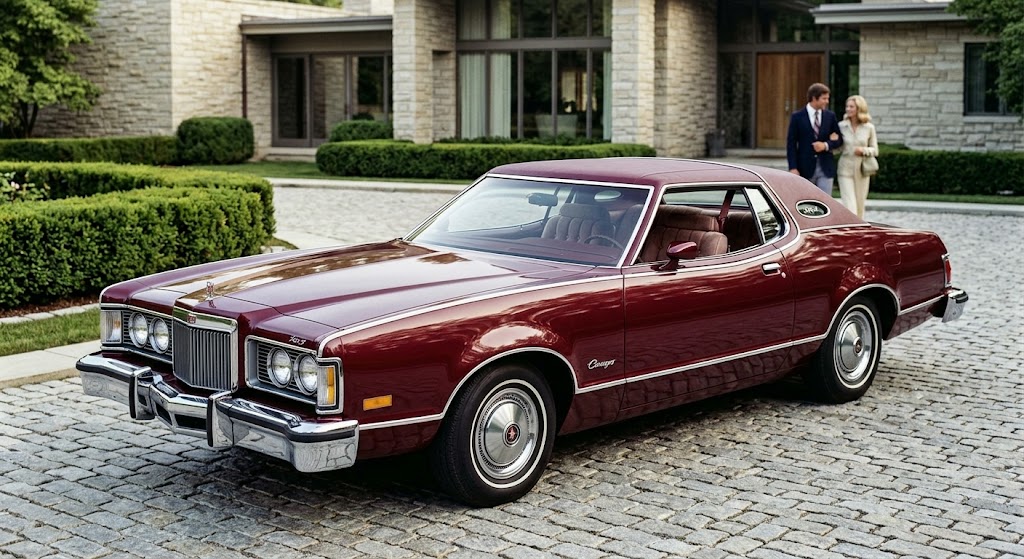
How Mercury Cougar Shaped Luxury Cars
Call the Mercury Cougar a rebadged Mustang and you’re only half right. Mercury borrowed the bones, sure. But the Cougar was trying to pull off something the Mustang never bothered with: be quick and still feel expensive.
That combo wasn’t a given back then. Plenty of folks assumed you picked one or the other. The Cougar spent the next several years arguing otherwise.
What Was the Mercury Cougar?
Mercury rolled the Cougar out on 30 September 1966 as a 1967 model. Ford’s own line on it is pretty blunt: this was Mercury’s version of the Mustang.
Fair enough, but there’s more going on there than it sounds. Mercury had to sit in an awkward spot, priced above regular Ford, priced below Lincoln, and every car wearing that badge had to earn its place in between. Slapping a new grille on a Mustang and calling it a day wasn’t going to cut it, not for this division.
So who was this actually for? Not really the Mustang crowd. Think someone a little older, a little further along in their career, who wanted the pony-car look without feeling like they’d bought their little brother’s car. Same Mustang platform underneath. Everything else got stretched and dressed up.
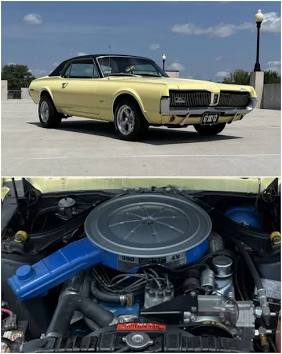
Why Mercury Needed the Cougar
The Mustang caught everyone flat-footed in 1964. Every division at Ford wanted in on that. But Mercury couldn’t just copy the homework — it needed its own angle.
Here’s the thing about Mercury: it only made sense as a brand if it filled that gap between Ford and Lincoln. Ford says as much itself, a premium step up from a regular Ford, not quite Lincoln money.
So a plain Mustang with a different badge wasn’t going to do the job. People wanted something that felt like it belonged in that middle spot, and Mercury needed a car that actually lived up to it. That’s what the Cougar was for.
Cougar vs. Mustang: More Than a Rebadge
| Feature | Mustang | Cougar |
|---|---|---|
| Positioning | Performance/pony car | Upscale performance |
| Styling | Sporty | More refined |
| Wheelbase | Shorter | Longer |
| Interior | Sport-focused | More comfort-oriented |
| Brand | Ford | Mercury |
Look at the numbers and you’ll see it. Mustang: 108-inch wheelbase. Cougar: 111 inches, almost seven inches longer overall. Doesn’t sound like much on paper, but it’s the reason people who drove both noticed a real difference in ride and cabin noise.
Where’d those three inches go? Mostly legroom — about 2.6 inches of it. Engineers also used the extra room to soften the suspension a touch without wrecking how it handled. And more space in the doors and firewall meant more sound deadening could go in, so the Cougar just felt quieter climbing in.
Styling did even more of the work, honestly. Hidden headlights. Sequential taillights lifted straight off the Thunderbird. A longer hood, shorter deck, and that split “electric shaver” grille that looked nothing like the Mustang’s face. Step inside and it’s the same deal — nicer materials, a dashboard that looked finished rather than functional, extra padding under the carpet.
The Design Language of the Mercury Cougar
Hidden Headlamps
Pop-up-style concealed lights behind a split grille — pretty unusual for an American car at this price point in 1967. With the lights off, the whole front end looked clean in a way Detroit mostly wasn’t doing yet. Closer to what a European GT car was up to.
Sequential Taillights
This one’s a straight lift from the ’65 Thunderbird. Three bulb sections per taillight, fired in sequence by a little motor-driven cam mechanism, inside out, every time you hit the blinker. Way more complicated than just wiring up a flashing bulb. Mercury did it anyway because it looked expensive, and nobody else in this price class was bothering.
European-Inspired Styling
Long hood, short deck, a character line that just runs quietly along the doors instead of shouting — none of it reads like the Mustang’s more aggressive stance. Reviewers at the time landed on a phrase that stuck: “a Mustang in a tuxedo.”
Interior Refinement
Even a base Cougar felt a step nicer than a comparable Mustang, more insulation, better trim. Step up to the XR-7, though, and that’s where things actually got interesting.
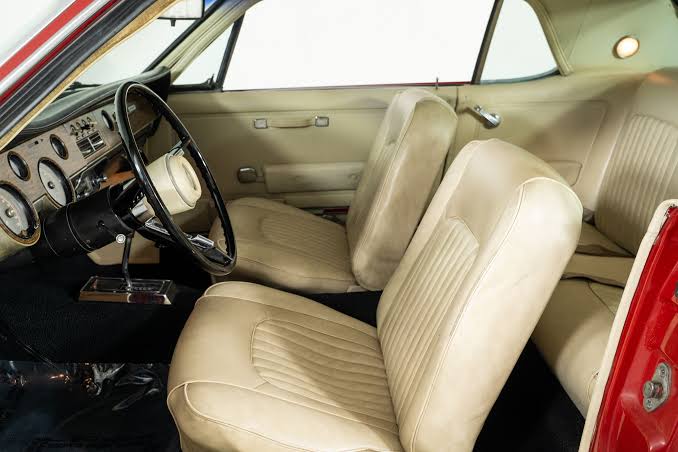
The XR-7: Where Performance Met Luxury
Mercury launched the XR-7 alongside the regular Cougar in 1967, tacked on as a $185 option. Cheap, for what you got.
Wood-grain trim (fake, but convincing) across the dash and console. Full black-face gauges with a tachometer. Toggle switches where a cheaper car would’ve used plain buttons. An overhead console with warning lights for the parking brake, low fuel, door ajar. Leather-and-vinyl seats came standard. There was even a “Tilt-Away” wheel, borrowed from the Thunderbird, that swung out of your way when you opened the door.
None of it made the car go any faster. That’s kind of the whole point. The XR-7 wasn’t chasing lap times — it was chasing the buyer who wanted a pony car that felt like a mini luxury coupe inside, whatever was under the hood. And people bought it: XR-7 trim made up something like a fifth of all Cougar sales most years, which is a lot for what was technically just an options package.
Performance Without Losing Comfort
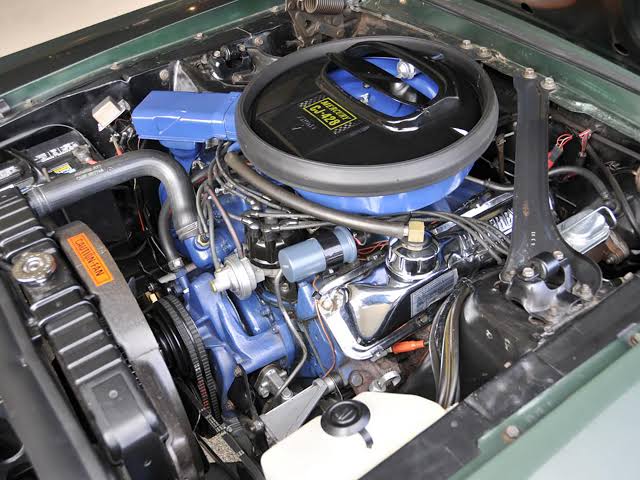
You couldn’t get a Cougar with anything smaller than a V8. No four-cylinder, no six. Mercury wasn’t interested in the economy buyer, and this was the clearest way to say so.
Base engine: a two-barrel 289, 200 horsepower. Most buyers stepped up to the four-barrel version at 225. At the top sat the 390 “Marauder” V8, good for 320 horsepower, reserved for the GT package.
GT buyers got dual exhaust, firmer suspension, and a handling package meant to keep all that extra weight and length from turning the car into a sofa on wheels. Reviewers at the time did note the trade-off — a Cougar was a bit slower off the line than an equally equipped Mustang, thanks to the added heft. Most people didn’t seem to mind. The ride was smoother, the cabin quieter, and that was kind of the whole trade you were signing up for.
How the Cougar Evolved
1967–1968
Barely changed between these two years — a few trim and lighting tweaks for ’68, nothing more. If you want the purest version of the “Mustang in a tuxedo” idea, this is it: Mustang mechanicals wrapped in genuinely different sheet metal, with a personality that didn’t feel borrowed.
1969–1970
1969 actually shook things up. The body sides picked up that “Coke bottle” curve everyone in Detroit was chasing that year, the sequential taillights went concave, and — finally — a convertible joined the lineup, in both regular and XR-7 trim.
Performance fans got the Eliminator that same year, a decor-and-handling package that opened the door to the 428 Cobra Jet and, briefly, the Boss 302. Genuinely quick car. Still looked like it was wearing a coat and tie on the outside, muscle car hiding underneath.
Later Generations
Second generation ran 1971 through 1973, bigger again, drifting further from pony-car territory toward what Ford and Mercury were now openly calling a personal luxury car. Both the convertible and the Mustang platform got dropped after ’73.
Starting in 1974, the Cougar left the Mustang underpinnings behind entirely, moving onto the bigger Torino and Montego chassis with a 114-inch wheelbase. Now it was a full-on personal luxury car, going head to head with the Monte Carlo and Grand Prix, sharing bones with the short-lived Ford Elite. The Cougar name stuck around through several more redesigns into the ’90s, eventually shrinking back down into a small sport coupe before Mercury finally pulled the plug in 2002.
The Cougar’s Influence on Personal Luxury Cars
By its third generation, there was already a name for the game the Cougar was playing: personal luxury cars, built around style and comfort rather than practicality or lap times.
The Cougar didn’t start that game, to be clear. The Thunderbird had been playing it for years already. Buick’s Riviera and Oldsmobile’s Toronado were doing their own version by the mid-1960s too.
What the Cougar actually pulled off was narrower than “inventing” anything. It proved a mid-priced brand — not Ford’s flagship personal-luxury nameplate, just Mercury — could run the same play starting from an ordinary sporty-car platform. Turns out you didn’t need Thunderbird money to get performance wrapped in upscale detailing. Ford’s planners had living proof, one price tier down, of how far you could stretch a shared platform with nothing but styling and trim.
GM answered with the Monte Carlo and Grand Prix a couple years later, chasing that same middle ground. Ford’s own Elite joined in once the Cougar moved fully upmarket in 1974. Mid-priced coupes built around comfort and image, not raw sportiness, sold like crazy through the ’70s. The Cougar just happened to get there early.
Why the Mercury Cougar Still Matters
Collectors are still after first-generation Cougars specifically, and the XR-7 and Eliminator models tend to hold their value against a comparable Mustang from the same year. Some of that’s the styling — it still looks distinct rather than dated. Some of it’s just scarcity. Mercury never built these in Mustang numbers, so a good original one is genuinely hard to find now.
The design outlived the car, too. Hidden headlights and sequential taillights kept showing up on Mercury models years after the first Cougar left showrooms. And the basic move Mercury pulled — take a mainstream platform, stretch it, dress it up for a different buyer — wasn’t unique to the Cougar for long. GM and Chrysler both ran the same play through the ’70s.
Look at the arc of the car itself and you get a pretty clean snapshot of where American tastes were headed. Genuine pony car with real performance chops in 1967. Straightforward personal luxury coupe by 1974. Seven years, same nameplate, completely different car.
Was the Mercury Cougar a luxury car? Not at launch — it started as a pony car with upscale touches, built for performance first. By the mid-1970s, though, yes, it had turned into a full personal luxury car, right alongside the Thunderbird and Monte Carlo.
Was the Cougar based on the Mustang? For its first two generations, yes. Same Falcon-derived unibody platform as the Mustang, just stretched onto a longer wheelbase, all the way through 1973.
Why was the Mercury Cougar different from the Mustang? Longer wheelbase, softer suspension, more sound insulation, and styling that had nothing to do with the Mustang — hidden headlights, sequential taillights, its own grille. All of it aimed at feeling more upscale than its Ford sibling.
What was the Cougar XR-7? A $185 top-trim package in 1967 — wood-grain trim, full instrumentation, leather seats, an overhead console. This is basically what people mean when they call the Cougar a luxury pony car.
When was the Mercury Cougar introduced? 30 September 1966, as a 1967 model.
Written by the techgenmag.com automotive history desk. Details and figures above draw on Ford’s own historical material, period sales literature, and established automotive publications; specific option pricing and production numbers can vary slightly between sources. Last updated September 2026.