
Humanoid Robots Will Someday Fly Our Planes
A robot flying a passenger airplane sounds like science fiction to most people. Pilots spend years learning the job.
They read changing weather, talk to air-traffic control, watch a dozen systems at once, and improvise when something goes sideways. So why would anyone want to hand that over to a machine?
The honest answer isn’t really about replacing pilots. It’s about how far automation can push into a job that’s always assumed a human body sitting in the seat.
Aviation already leans hard on computers for navigation, stabilization, and monitoring. The open question is whether a robot could go further and physically operate the same controls a human does, working alongside the automation that’s already there.
Why Would a Robot Need to Fly an Airplane?
Seems unnecessary at first. Aircraft already have autopilot, and modern airliners don’t need a human hand on every input from takeoff to landing.
So the interesting question isn’t really “can a robot fly a plane.” Machines already handle plenty of that. It’s “can a robot work inside a cockpit that was never designed for it,” which is a genuinely different problem.
A robot built to use the same controls, switches, and instruments a human pilot uses doesn’t require redesigning the aircraft at all. It just has to fit into the one that already exists.
The Challenge of Human-Machine Interfaces
Cockpits are built entirely around human bodies. Controls sit where a hand naturally reaches. Displays are laid out for human eyes to scan quickly.
A robot needs more than software to work in that space. It needs arms and hands that can actually grip a yoke or flip a switch, cameras and sensors that can read a display the way a person does, and enough balance and motion control to do all of that reliably while the aircraft moves underneath it.
That’s exactly why humanoid robotics keeps coming up in this conversation. A human-shaped robot can use tools and interfaces built for people without anyone having to redesign the hardware around it.
Why Humanoid Robots?
Plenty of robots exist for narrower jobs: factory arms, warehouse haulers, machines built for one repetitive task. Humanoid robots solve a different problem.
They’re shaped to fit an environment humans already built. Doors have handles sized for hands. Cockpits have seats, screens, and control columns designed around a human pilot’s reach and eyeline.
South Korea’s KAIST has already tested this idea directly. Its robot, called PIBOT, stands just over five feet tall and has flown a flight simulator using the exact same controls a human pilot would, stabilizing the aircraft through turbulence and storing every navigation chart a pilot would need without redesigning a single instrument.
That doesn’t prove humanoid robots are the right answer for every cockpit job. It does prove the basic idea works well enough to be worth taking seriously.
Robotics and Aviation Have More in Common Than You Might Think
A modern airplane is already a fairly sophisticated robotic system, even with a human in the seat. Computers watch aircraft systems continuously, sensors track conditions, and autopilot holds altitude and heading without anyone touching the controls.
The pilot increasingly supervises rather than manually flies. Adding a physical robot into that picture isn’t the dramatic leap it sounds like. It’s closer to extending a process that’s already well underway.
What Would a Robotic Pilot Actually Do?
A robotic pilot wouldn’t necessarily need to make every call on its own. It could handle specific pieces: watching instruments, running routine procedures, assisting with navigation, flagging anomalies to a human.
The pilot stays involved in the decisions that actually matter. That’s collaboration, not replacement, and it matches how automation already tends to work best: machines handling the repetitive or highly precise parts, humans holding onto judgment and oversight.
The Importance of Sensors
A robot can’t do any of this without understanding what’s around it. Humans lean on sight, hearing, touch, and a general sense of where their own body is in space.
Robots need mechanical equivalents for all of that: cameras for vision, force sensors to judge how hard they’re gripping something, motion sensors to stay balanced. Combining all of it fast enough to react in real time is the actual hard part, and in aviation, a slow or wrong reaction isn’t a minor bug.
Artificial Intelligence Changes the Equation
Having the right hardware is only half the problem. Software has to interpret what the robot is looking at, which controls matter right now, and what response the situation actually calls for.
Aviation demands something AI doesn’t always deliver easily: predictable behavior. A consumer app that occasionally surprises you is a mild annoyance. A flight-control system that surprises you is a different category of problem entirely, which is why aviation automation gets held to such a high verification standard before anyone trusts it near a real cockpit.
Robots Don’t Get Tired
Consistency is the obvious edge a machine has. Humans get tired, get distracted, and react differently under stress than they do on a calm day. A robot doesn’t carry any of that baggage in the same biological way.
That doesn’t make humans obsolete, though. People are still far better at handling the genuinely unusual situation, the one nobody wrote a procedure for, and that’s exactly where the strongest system is probably some combination of both rather than either alone.
Humans and Robots Working Together
Rather than asking whether robots replace pilots, the more useful question is how they make pilots better. A robotic assistant could watch systems constantly, catch a developing problem before it turns serious, and hand off routine physical tasks so the pilot can focus on the bigger picture.
Aviation’s already comfortable with this model. Computers never replaced pilots outright. They gave pilots tools to manage aircraft that had become too complex to fly by feel alone, and a robotic assistant is really just the next tool in that same lineage.
What Happens During an Emergency?
Routine flying is fairly predictable. Emergencies aren’t, and that’s where robotic aviation gets genuinely hard.
An unexpected failure creates a situation nobody scripted in advance. A robot first has to notice something’s actually wrong, which sounds simple until you remember it has to do that through cameras and sensors rather than instinct.
From there it has to work out what the problem actually is, settle on a response, and carry that response out, all while the aircraft keeps flying. None of those stages gets to be the weak link. A system that’s fast at three of them and slow at the fourth is still a system that fails.
The Difference Between Automation and Autonomy
These two words get used interchangeably, but they’re not the same thing. Automation follows a defined set of rules. Autonomy means the system interprets its environment and decides what to do based on that read.
A standard autopilot is highly automated. A genuinely autonomous aircraft would need to handle a far wider range of situations than any current autopilot is asked to, which is the real distinction hiding underneath the idea of a robotic pilot: the goal isn’t building a machine that can move a control stick. It’s building one that understands why and when that movement actually makes sense.
Why Aviation Could Benefit From Robotics
The applications go well past replacing an airline captain. Uncrewed or heavily automated cargo aircraft could reduce how much human involvement certain routine freight routes need.
Military aviation already uses robotics and autonomy specifically to keep people out of the most dangerous missions, and the US Air Force Research Laboratory demonstrated a version of this back in 2020, when its ROBOpilot program flew a converted Cessna 206 using a robotic system standing in for a human pilot.
Ground operations are the nearer-term story, honestly. Japan Airlines began trialing humanoid robots from Unitree Robotics in May 2026, using them for baggage handling, cargo transport, and cabin cleaning at Haneda Airport, work chosen specifically because it’s repetitive, physically demanding, and increasingly hard to staff.
None of that involves flying an aircraft at all, but it’s the same underlying bet: airports and cockpits were built for human bodies, so a human-shaped robot fits without anyone rebuilding the infrastructure around it.
The Problem of Trust
Being technically capable and being publicly accepted are two different hurdles. Passengers need to trust whatever’s operating their aircraft, especially the moment something goes wrong.
Knowing a human pilot is on board is reassuring in a way a fully autonomous system doesn’t automatically inherit.
People need to understand not just that a system works, but what it actually does when something unexpected happens, and that gap is as much a trust problem as an engineering one.
Could Robots Completely Replace Pilots?
Harder question than it sounds. Automation will keep chipping away at the manual workload pilots carry, but full replacement runs into far more than just technology.
Someone has to certify the system, decide who’s liable when it fails, and lock down the software against tampering, well before public acceptance even enters the conversation.
And a fully autonomous aircraft still has to handle the emergency nobody anticipated, the exact scenario a rulebook can’t fully prepare it for.
Regulators would need extremely high confidence before letting an aircraft carry passengers without any human pilot aboard. Gradual automation is the far more realistic path than a sudden jump to full replacement.
The Future Cockpit
Tomorrow’s cockpit probably looks different from today’s. Physical controls could matter less as displays get smarter and AI takes on more continuous monitoring, with a robotic system stepping in physically only when it actually needs to.
None of these pieces really compete with each other. Sensors gather information, AI makes sense of it, automation handles the routine, a robot handles the physical world when needed, and a human holds the judgment call at the top.
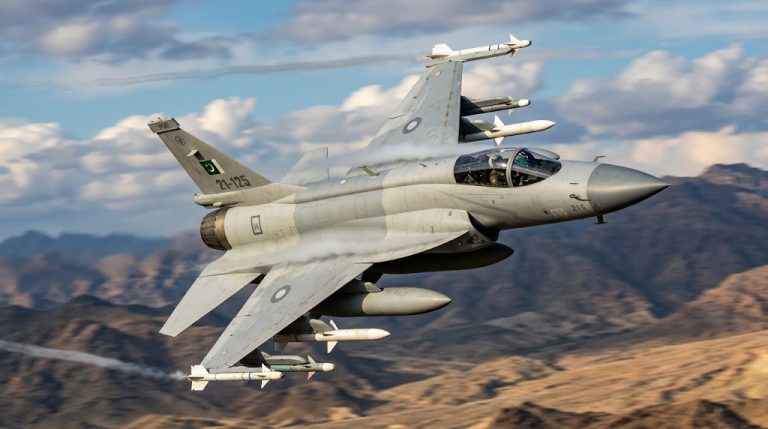
Stacked together, that combination does more than any one piece could alone, in the same way clean-sheet engineering in other fields, like the ambitions behind projects such as the JF-17 Thunder, often comes down to getting several separate systems to work well as one.
Lessons From Industrial Robotics
Aviation isn’t the first industry to walk this path. Factories have used robots for decades, precisely because a factory floor is predictable enough for a robot to handle reliably.
An airplane’s environment isn’t nearly as forgiving. Weather shifts, equipment fails, other aircraft share the same airspace, and human decisions constantly change the picture.
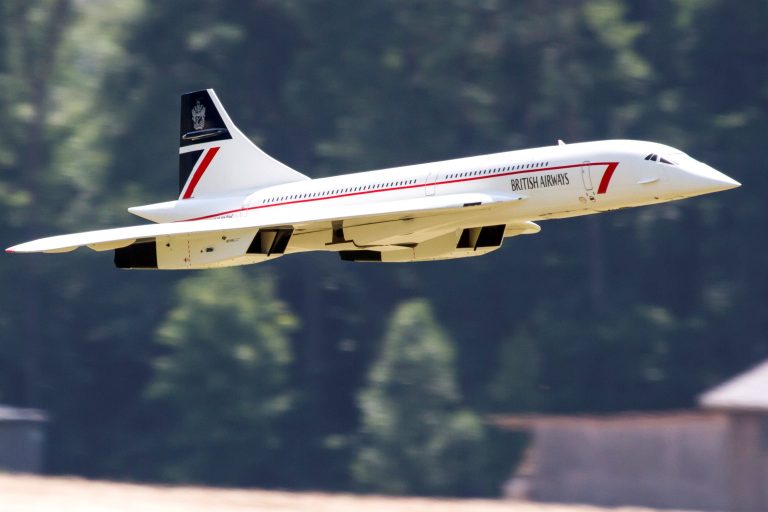
That unpredictability is exactly why aviation robotics is a harder problem than anything a factory floor has thrown at robots so far, closer in spirit to the messy, weather-dependent engineering problem behind supersonic flight than to a repeatable assembly line.
Why Humanoid Robots Remain Interesting
Humanoid robots aren’t automatically the best tool for every job. A dedicated robotic arm usually beats a humanoid at repetitive factory work, and a wheeled robot usually gets around a warehouse better.
The advantage shows up specifically when a machine has to operate somewhere built for humans, and a cockpit is about as human-built an environment as exists.
The goal was never making robots look human for its own sake. It’s making them capable of working inside spaces that already assume a human body is doing the job.
What Comes Next?
This isn’t likely to arrive as one dramatic breakthrough. It’s going to be a long accumulation of smaller ones: better sensors, more reliable software, sharper computer vision, more capable AI, steadier robotic movement.
Each improvement nudges the boundary a little further, until the line between pilot assistance, automation, robotics, and full autonomy gets genuinely hard to draw.
Why This Matters Beyond Aviation
None of this technology stays confined to airplanes. A robot capable of understanding a complex physical environment and interacting with human-built tools is useful in self-driving vehicles, disaster response, space exploration, and manufacturing, including the kind of precision materials work companies like Formlabs have pushed forward in industrial 3D printing.
Aviation just happens to be one of the toughest possible testing grounds, which makes it a genuinely useful place to prove the concept before it shows up everywhere else.
Frequently Asked Questions
People tend to ask a handful of the same things here. Can robots already fly airplanes?
Aircraft already run on sophisticated autopilot, but a humanoid robot physically working an unmodified cockpit, the way KAIST’s PIBOT has done in simulation, is a different and much newer idea than ordinary autopilot.
Why would a humanoid shape specifically help? Because cockpits are built around human bodies, and a human-shaped robot can use those same controls without anyone having to redesign the aircraft around it.
Will robots actually replace airline pilots? Uncertain, honestly. Automation keeps expanding, but safety rules, liability questions, and public trust make full replacement a far bigger hurdle than the flying itself.
The difference between automation and autonomy comes down to this: automation follows predefined procedures, while autonomy means the system reads its environment and decides what to do on its own.
And aviation is hard for autonomous robots specifically because the environment is unpredictable in ways a factory floor isn’t, where a wrong or slow decision can carry real consequences.
A humanoid robot flying a passenger jet still sounds futuristic, and mostly is. But the pieces behind it, better robotics, sharper AI, more capable sensors, are already moving forward across a dozen unrelated fields at once.
The more realistic future probably isn’t robots replacing pilots outright. It’s humans and machines settling into a closer working arrangement, where the pilot spends less time on the controls and more time supervising the systems doing the flying, stepping in exactly when judgment still matters more than programming.
Written by the techgenmag.com aviation and technology desk. Robotics and AI research in this space is moving quickly; figures and project details above reflect the most recent public information as of this writing. Last updated September 2026.