Making Flying Cars and Commuter Aviation a Reality
For as long as people have imagined the future, they’ve imagined cars that leave the road behind. Finish work, lift off above the traffic, land at home without an hour lost to the highway.
Sounds like science fiction. The engineering problem underneath it, though, is very real, and researchers have been chipping away at it for longer than most people realize.
Over a decade ago, a European research effort was investigating what it would actually take to make small aircraft easy enough for ordinary people to fly. Not just build a flying vehicle. Figure out whether personal aerial transportation could genuinely become part of a daily commute.
Since then, the landscape looks different. Electric propulsion, autonomous flight systems, and a wave of new aircraft have pulled the whole idea back into focus, even if it doesn’t look much like the flying car of old movies.
Why Do We Need Flying Cars?
The strongest case for this technology isn’t really about speed. It’s about traffic.
Modern cities pack millions of people into a small footprint, and roads have a hard ceiling on how much capacity you can add. More lanes means more construction, more land, and eventually the same congestion problem right back where it started.
Air travel sidesteps that entirely. Instead of competing for space on the ground, an aircraft just goes over it, and for trips between congested urban centers, that alone could save a meaningful chunk of time. The idea itself isn’t the hard part. Making it practical is.
Why Traditional Aircraft Aren’t Enough
Fair question: if airplanes and helicopters already exist, why do we need anything new? The honest answer is convenience, not capability.
A conventional flight starts long before takeoff. Drive to the airport, park or arrange a ride, wait around, fly, then repeat the whole process in reverse once you land. For a long trip, that overhead barely registers. For a short commute, it swallows the entire time savings.
That’s the gap personal aviation is actually trying to close: an aircraft operating close enough to where people actually live and work that most of those extra steps just disappear.
The MyCopter Experiment
One research program from that earlier wave is worth a closer look. Rather than designing yet another small helicopter, the researchers focused on the parts everyone else had skipped: the infrastructure, the human-machine interface, and whether society would even accept aircraft flying at low altitude over cities.
That’s a genuinely different question than “can we build this.” It pulls together aerospace engineering, automation, and transportation planning all at once, and the project’s own conclusion was blunt: most earlier personal aerial vehicle concepts had failed specifically because they started with vehicle design and left the operational and social questions for later.
Flying Is Much Harder Than Driving
Driving works because roads impose structure. Lanes, signs, intersections, an established grid everyone already understands.
Flying drops all of that. A pilot is tracking altitude, direction, airspeed, weather, other traffic, navigation, and aircraft systems simultaneously, in three dimensions rather than two. For someone who’s never flown, that learning curve isn’t just steeper than driving, it’s a different category of skill entirely, which is exactly why every serious flying-car concept eventually runs into the same wall: automation isn’t optional here. It’s the whole ballgame.
Making Aircraft Easier to Control
Modern aircraft already lean hard on computers for stabilization, navigation assistance, and system monitoring, tasks that would be genuinely difficult for a human to track manually in real time.
Personal aviation pushes that idea further still. Instead of turning every commuter into a trained pilot, future aircraft could let someone specify a destination and let automated systems handle the bulk of the flight, human oversight staying in the loop for safety and redundancy rather than doing the moment-to-moment flying.
Why Vertical Takeoff Matters
Runways are the real bottleneck for conventional aircraft. They’re large, airports built around them are expensive, and neither fits into the middle of a dense city.
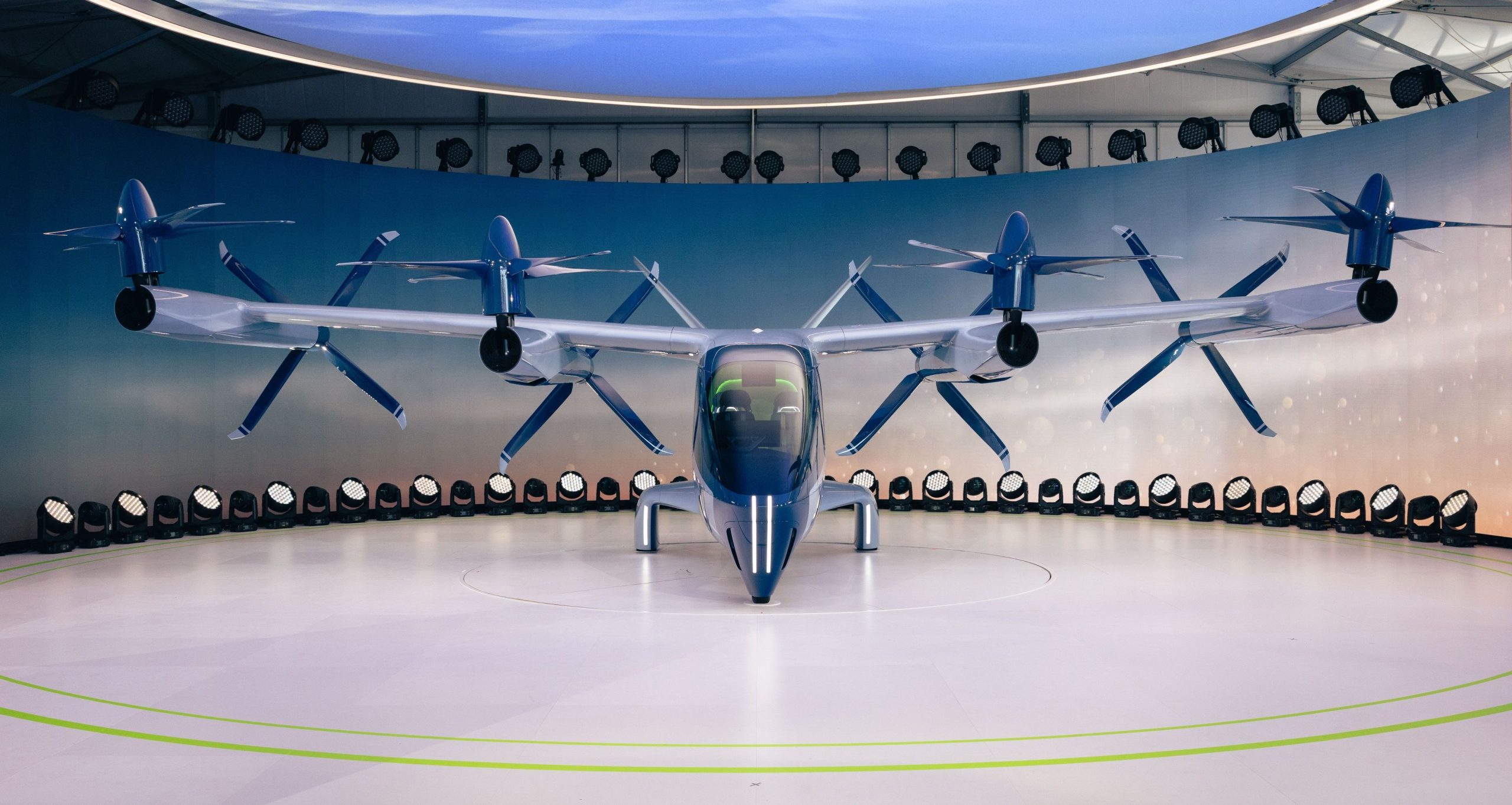
Vertical takeoff and landing sidesteps that problem by letting an aircraft operate from a much smaller footprint, closer to homes and transit hubs than any runway could get. Electric versions of this kind of aircraft take that a step further by pairing vertical flight with electric propulsion, often using several smaller motors and rotors instead of one large engine doing everything.
From Flying Cars to eVTOL Aircraft
The terminology has shifted over the years, and it’s worth noticing why. The old “flying car” idea meant a vehicle that drives on a normal road and then takes off, which sounds convenient but forces a lot of compromise: wheels, suspension, and crash structure for the road, plus wings or rotors and lightweight airframes for the air, all crammed into one machine.
Most developers have since walked away from that compromise entirely. A dedicated electric aircraft doesn’t need to drive anywhere. Its only job is flying, which lets engineers optimize the whole aircraft for that one task instead of splitting the design between two very different jobs.
The Electric Revolution
Electric propulsion is the biggest reason this field has attracted fresh interest. Electric motors are compact, mechanically simple, and can be distributed around an aircraft and controlled independently, which is exactly what makes unusual multi-rotor designs possible in the first place.
The catch, and it’s a real one, is that batteries are heavy. Every extra bit of battery weight an aircraft carries eats into its range, payload, and efficiency, which forces a genuine balancing act between battery weight, passenger capacity, and how much reserve energy the aircraft can afford to keep in the tank. That tradeoff is exactly why electric aircraft currently make far more sense for short urban hops than for replacing a long-haul airliner.
The Noise Problem
A handful of aircraft flying over a city probably wouldn’t bother anyone. Thousands of them, on a regular schedule, is an entirely different problem, and it’s one that doesn’t show up when you’re looking at a rendering on a screen.
That’s why acoustic engineering has become such a serious part of this field: rotor design, motor characteristics, flight paths, all of it aimed at keeping the aircraft quiet enough that people living underneath the flight paths actually tolerate it. Getting believable, independently verified noise numbers has become as central to the pitch as the flying itself.
Safety Comes First
A car that develops a problem can pull over. An aircraft can’t, and that single difference is why personal aircraft need several redundant layers of protection stacked on top of each other.
Backup propulsion in case a motor fails. Automated systems watching for other traffic. Constant monitoring of the aircraft’s own health, with the ability to land itself if a human can’t.
Software carries a lot of that weight. The aircraft itself is only half the system. The computers running it matter just as much, arguably more, since a well-designed backup system is often what actually keeps a bad situation from becoming a disaster.
The Role of Autonomous Flight
Autonomous technology could eventually reshape the economics of this whole category. Today, flying anything requires extensive training, which makes total sense for large, fast aircraft in complex airspace, but it’s also the exact barrier that keeps personal aviation from ever reaching mass adoption.
Automation could take over routine tasks. Navigation and stabilization first, then route management and eventually landing itself, with the human role shrinking as those systems prove reliable.
None of that comes free, though. Someone still has to work out certification, keep the software trustworthy against failure and interference, and settle who’s actually on the hook when an autonomous system makes a mistake.
Flying Cars Need Infrastructure
Building the aircraft is genuinely the easier half of this problem. A real transportation system needs places to take off and land, which is why dedicated small-footprint landing facilities integrated with existing transit hubs have become such a focus.
Picture arriving at a train station and transferring straight to a short aerial hop, or taking an autonomous car to a landing pad before continuing the trip by air. In that version of the future, the aircraft isn’t replacing every other way of getting around. It’s just one more link in the chain.
The Airspace Problem
Roads have lights, signs, and lanes. Low-altitude urban airspace needs something similar once you’re talking about thousands of aircraft instead of a handful.
Which parts of the sky are open, and which aren’t. How aircraft find each other and stay apart. What happens the moment something goes wrong. All of that has to exist before this scales past a handful of demonstration flights.
That makes the future of urban aviation as much a software and air-traffic-management problem as an aerospace one. The aircraft has to talk constantly to the infrastructure around it, not just check in with a control tower every so often.
Regulation Could Be a Bigger Challenge Than Engineering
An aircraft that flies perfectly on a test range still can’t just start carrying passengers the next day. Aviation regulation exists because mistakes here carry real consequences, and a genuinely new aircraft category has to clear structural, propulsion, and flight-control standards before it earns a certificate.
Cities have their own homework too. How loud is too loud, which corridors aircraft can actually use, what a landing facility has to look like, who gets a say on privacy grounds. None of it gets settled quickly, and none of it can really get finalized until the technology itself is further along.
The two have to develop side by side. That’s part of why this timeline keeps stretching further than the engineering alone would suggest.
What Could Urban Air Mobility Look Like?
Realistically, this doesn’t end with everyone owning a personal flying car. It looks more like an added layer on top of the transportation network that already exists: home to an autonomous vehicle, vehicle to a landing pad, landing pad to a short aerial hop, then local transport again on the other end.
People already chain together cars, trains, and planes depending on the trip, so urban air mobility mostly just adds one more mode into a mix that already exists.
Where it actually fits becomes clearer once you think about what each option is bad at. A car gets stuck in the traffic it’s supposed to avoid. A conventional aircraft is fast in the air but slow at the edges, all that time spent getting to and from an airport eats the advantage. A shorter aerial hop tries to sit in the gap between them, quick over a mid-range trip, without needing a full airport to pull it off.
It comes with its own weak point too, one the other two don’t share to the same degree. Battery range is still limited, the ground infrastructure barely exists yet, and the regulations governing all of it are still being written in real time.
What Happened to the Original Flying-Car Vision?
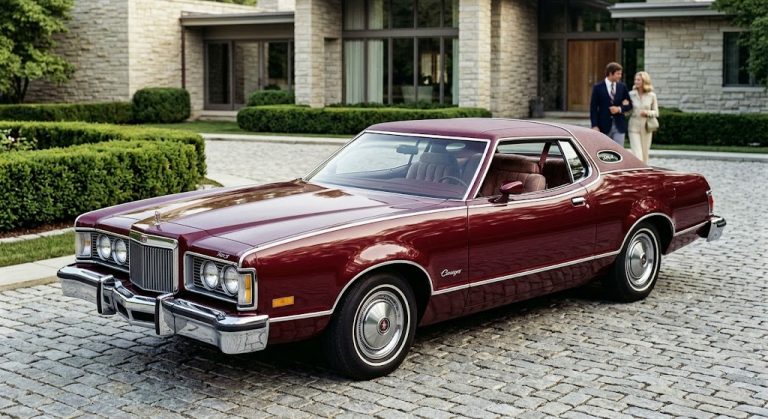
Looking back at older predictions, the shape of the idea has genuinely changed. The classic flying car was a road vehicle with wings bolted on. The current version is a lot more specialized: dedicated aircraft, supported by automation and digital infrastructure, rather than one machine trying to do two very different jobs.
That’s arguably a more realistic ambition than the original one. It’s less “put wings on every car” and more “build a transportation network that actually uses three-dimensional space,” which is a considerably bigger and, frankly, more useful idea than the one science fiction sold everyone on.
Why Flying Cars Still Matter
Even if nobody ever parks a flying car in a suburban driveway, the underlying research still pays off elsewhere. Electric propulsion feeds back into aircraft design generally. Autonomous systems improve transportation broadly. Lightweight materials and better sensors show up in products that have nothing to do with flying at all.
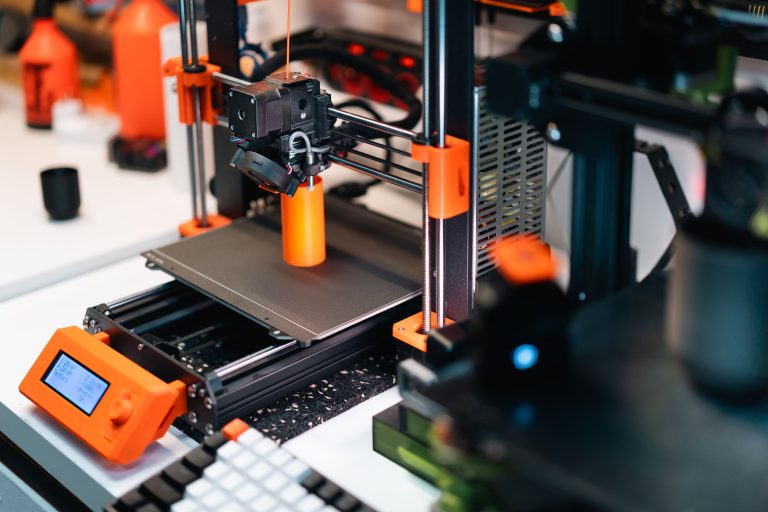
That kind of spillover isn’t unusual for ambitious engineering projects. It’s a similar pattern to how advances in 3D printing technology ended up reshaping manufacturing workflows well beyond the market they were originally built for. Technology rarely stays inside the category it started in.
The Future of Personal Aviation
A handful of specific advances will decide how far this actually goes, and they’re not really separate problems.
Batteries need to hold more energy without adding weight, since that’s what actually limits how far and how many people an electric aircraft can carry. Motors and propulsion systems need to get both more efficient and quieter at the same time, not one at the expense of the other. Software has to take on more of the actual flying, route planning, monitoring, reacting to conditions, so the human role can shrink safely rather than just being removed. And none of it matters without somewhere to actually take off and land, which means the ground infrastructure has to grow at roughly the same pace as everything else.
None of these move the needle much in isolation. The actual breakthrough, if there is one, comes from all of it landing at roughly the same time.
Will Flying Cars Actually Become Normal?
Genuinely open question. The core technology to make something fly isn’t new. What’s hard is building an entire ecosystem, safe, quiet, affordable, reliable, and convenient all at once, and that’s a much higher bar than just getting an aircraft off the ground.
Cost decides most of it in the end. If a short aerial hop costs several times what driving or public transit would, most people simply won’t use it for a daily commute, no matter how quiet or safe the aircraft is. The technology has to get cheap enough to actually compete, not just work.
A few companies are currently pushing toward exactly that test, running certification programs and early passenger demonstrations in a handful of cities around the world. None of it looks like the four-seat commuter jump most people picture when they hear “flying car” just yet, but it’s the closest anything has come to paying passengers in the air on a routine basis.
Frequently Asked Questions
People asking about this topic tend to circle the same handful of questions. Commuter aviation, in plain terms, means using aircraft for relatively short trips between nearby cities or communities, rather than long-haul travel.
The earlier research projects in this space looked specifically at what would make small aircraft easy enough for non-pilots to fly and use for everyday transportation. A flying car and a modern electric aircraft aren’t quite the same thing, either: the classic flying car implies road-and-air capability in one vehicle, while today’s designs are purpose-built for the air alone, with no pretense of driving on a highway.
Electric motors matter here mainly because they’re compact and can run independently across multiple rotors, which opens up aircraft configurations a single engine never could. Their real limiting factor is battery energy density, not the motors themselves. As for the biggest overall challenge, there genuinely isn’t just one. Safety, batteries, noise, regulation, infrastructure, and cost all have to improve roughly in parallel.
Could this actually cut traffic? For some trips, yes, if the routes and pricing line up. It won’t replace roads broadly, since the aircraft themselves still need dedicated infrastructure and airspace management that doesn’t exist yet at any meaningful scale.
The flying car has stuck around in the popular imagination for generations because it represents something specific: freedom from the road, one of the oldest constraints on getting anywhere. The version actually taking shape now probably won’t look like the movies promised, no sedan sprouting wings mid-flight.
It looks more like quiet electric aircraft, automated flight systems, dedicated landing pads, and a transportation network smart enough to tie it all together. Less dramatic than the poster version, maybe. Possibly more useful because of it.
Written by the techgenmag.com aviation and technology desk. Figures on aircraft certification and commercial timelines reflect the most recent public statements as of this writing and are likely to shift as certification progresses. Last updated September 2026.