How Technology Has Transformed Card Games: From Electronic Machines to Digital Platforms
Card games have been around for hundreds of years. For centuries, people have gathered around tables, shuffled thick paper cards, and dealt them one by one. The basic rules are simple and have barely changed to this day.
But look at how we play them now.
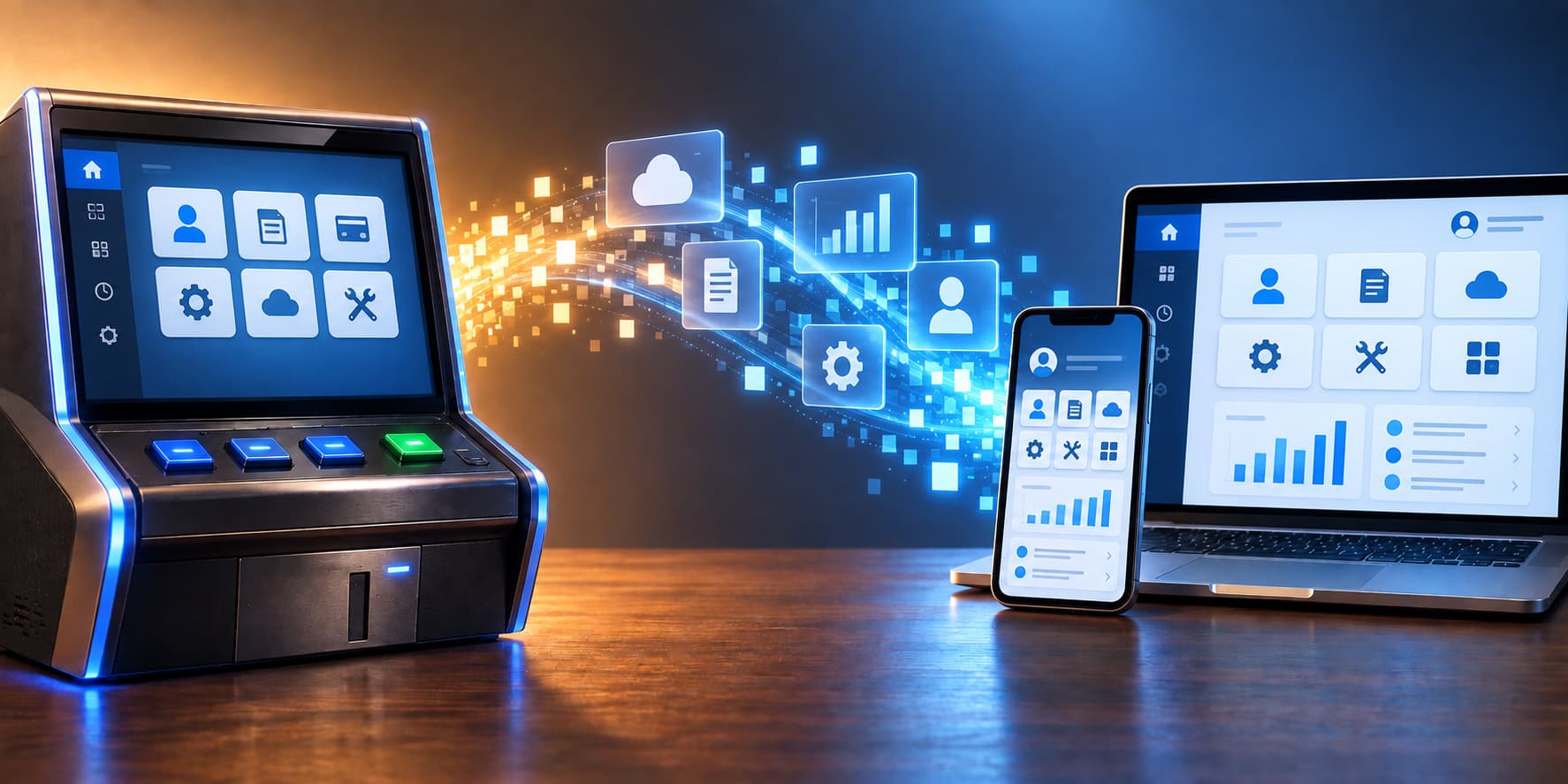
Physical Cards → Electronic Machines → Personal Computers → Networked Software → Internet Platforms
The rules may be exactly the same as those our grandparents played by. What has changed is the medium through which the game takes place, following a long journey of technological evolution.
The cards themselves have not changed. The delivery system behind the scenes keeps taking new forms.
When Card Games Met Electronic Machines
Before computers entered people’s homes, electronic technology had already made its way into entertainment venues through bulky game cabinets.
This was where card game logic was first taken off physical paper and embedded in electronic circuits. These early machines combined curved CRT screens, hard plastic buttons, and systems with very limited data transmission capabilities.
From Physical Mechanisms to Software
Moving paper cards onto a screen was no easy task at the time.
Engineers had to translate manual rules—such as shuffling a deck, randomly dealing five cards, and calculating number combinations—into sequences of binary instructions. Physical cards, which had relied on gravity and human dexterity, were replaced entirely by programming logic.
Why Microprocessors Marked a Turning Point
The arrival of affordable microprocessors in the 1970s and 1980s was a major driving force behind this revolution.
Microprocessors allowed machines to perform randomization independently, without human intervention. The result? Games ran much faster and more consistently, and players could no longer cheat through the sleight-of-hand tricks used by street card players.
Bola Tangkas as Part of the Electronic Transition
The development of screen-based entertainment machines gave rise to various game formats around the world.
In Indonesia, bola tangkas can be seen as one example of how card-based formats became familiar through screen-based electronic gaming.
These physical machines became an important marker of changing gaming habits in the 1980s. Players who had been accustomed to handling cards at a table began getting used to watching the glow of CRT monitors and responding to cards on the screen through physical buttons on a control panel.
This transition from paper to arcade machines paved the way for the adoption of much more sophisticated computer technology in the following decade.
Personal Computers Changed Game Distribution
As the 1990s began, the technological landscape shifted dramatically. Dedicated electronic machines that could run only one program began losing ground to personal computers.
A PC is a general-purpose device. A single computer on a desk at home could be used to write documents, process data, and run games.
The impact on the card game industry was enormous:
- Faster development: Engineers no longer needed to assemble a new printed circuit board just to create a game.
- Improved visual resolution: Card images made up of coarse pixels began giving way to smoother graphics.
- Greater storage capacity: The use of cassettes, floppy disks, and eventually CD-ROMs allowed game software to include far more complex features.
- New controls: Keyboards and mice replaced the rigid plastic buttons found on older machines.
Software Took Over Many Hardware Functions
The biggest change in the PC era was the migration of functions. Physical components that had once occupied space inside wooden cabinets were reduced to lines of code in computer memory.
Game Logic
The computer’s main CPU handled all game logic. The mathematical calculations used to determine how cards were dealt took only milliseconds.
Graphics Rendering
Cards were no longer displayed using incandescent lights or simple logic circuits. Digital cards were rendered by graphics processing units, or GPUs, which could produce smooth animations as cards moved across the screen.
User Input
The system no longer required complicated wired button panels. Left and right mouse clicks, or a press of the keyboard’s space bar, were enough to handle all navigation.
Data Storage
High scores, display preferences, and game histories no longer disappeared when the power went out, because they could be saved directly to a hard drive.
The Internet Freed Games from a Single Machine
Technology kept advancing. As network cables and internet connections spread across the world in the late 1990s, the concept of games confined to a local computer quickly began to feel outdated.
Client-server architecture emerged.
In this new system, the software on a user’s PC—the client—displayed the visuals and received input commands. Meanwhile, core game logic, user database storage, and account authentication were moved to central servers thousands of kilometers away.
Games were no longer isolated on a single desk. Players from different cities could connect to the same server, making the card game ecosystem feel much more lively and dynamic.
Tangkasnet as an Example of the Move to Networked Environments
This leap in networking technology naturally pushed older platforms to adapt or risk being left behind.
The development of tangkasnet can be understood within this broader shift, as digital game formats once associated with particular computers or machines began moving into network-connected environments.
This change did more than alter how data was processed behind the scenes. It also changed user habits.
A gaming experience that had once been highly local—tied to the location of a particular machine or physical computer—suddenly became a service accessible from anywhere, as long as the computer had an internet connection.
From Client Software to the Browser
Although games were already connected to the internet, the early days of networked gaming still had one lingering problem: complicated installation.
Players had to download large installer files, extract them, and then go through an installation process that often failed if their PC specifications were unsuitable.
Installed Client → Web Application → Browser → Cloud-Connected Platform
Web technology then came to the rescue.
Why Browsers Lowered Hardware Barriers
The development of web standards such as HTML5 and JavaScript turned browsers like Chrome, Firefox, and Edge into highly flexible environments for running applications.
Players no longer needed to download .exe files that placed demands on their computer’s memory. They could simply type a website address into a browser tab, and the game would be ready to play within seconds.
Updates No Longer Had to Be Performed on the User’s Device
In the era of older client software, players had to manually download a new patch file every time a bug was fixed.
With modern web technology, all system updates take place directly on the central server. As soon as users refresh their browser page, they automatically access the latest version without having to reinstall anything.
Smartphones Became the New Gaming Computers
If desktop PCs brought games onto desks at home, smartphones folded up the entire desk and slipped it into our pockets.
The transformation of hardware inside modern smartphones has been remarkable:
- System on a Chip (SoC): Modern mobile processors offer computing speeds far beyond those of desktop PCs from the 2000s.
- Energy-efficient mobile GPUs: These can handle advanced graphical animations without rapidly draining the phone’s battery.
- Interactive touchscreens: These remove the distance between the player and the interface. Fingers once again touch cards directly—this time on glass—much like handling physical paper cards.
- Wireless connectivity: 4G and 5G networks keep data connections to central servers stable, even when users are in moving vehicles.
What Has Actually Changed?
The long evolution of card game technology can be summarized as follows:
Physical Era
- Main hardware: Tables and paper
- Interface: Direct hand contact
- Distribution model: Physical stores or manual distribution
- Network connectivity: Completely offline
Electronic Era
- Main hardware: Cabinets and arcade machines
- Interface: Physical plastic buttons
- Distribution model: Hardware circuit boards
- Network connectivity: Limited or local
Desktop PC Era
- Main hardware: Personal computers
- Interface: Mouse and keyboard
- Distribution model: Software, cassettes, and CDs
- Network connectivity: Optional local area networks (LANs)
Web Era
- Main hardware: PCs and laptops
- Interface: Mouse clicks and browsers
- Distribution model: Website URLs
- Network connectivity: Fully online through the internet
Mobile Era
- Main hardware: Smartphones and tablets
- Interface: Touchscreens
- Distribution model: App stores and mobile websites
- Network connectivity: Wireless internet through cellular networks or Wi-Fi
Technology Changes, but the Basic Mechanics Can Endure
Looking back, we can draw one interesting conclusion: technology rarely creates a completely new type of game.
More often, technology acts as an accelerator and improves the way games are delivered.
Cards have moved from fragile physical objects into the rigid wiring of electronic machines, then into computer memory, and now into cloud networks accessible through a phone screen.
The basic mathematical rules of card games remain the same as they were hundreds of years ago. But advances in hardware, software, and the internet have made accessing this entertainment millions of times easier, faster, and more flexible.
Frequently Asked Questions (FAQ)
What are digital card games?
Digital card games are card-based games in which all rules, randomization, and visual presentation are handled by computer programs and displayed on electronic screens.
When did card games begin moving to computers?
The transition began in the 1970s with dedicated electronic arcade machines, then expanded rapidly into homes during the 1990s as personal computers became popular.
How has the internet changed digital games?
The internet transformed games from isolated local programs into connected platforms that rely on central servers to store account data, process game logic remotely, and update systems automatically.
Why are browsers important to the development of online games?
Browsers allow game applications to run instantly through website links, without burdening users with complicated software downloads and installation procedures.
How have smartphones changed gaming technology?
Smartphones have moved digital entertainment into users’ pockets by combining intuitive touchscreens, powerful mobile processors, and continuous wireless internet connectivity. serta dukungan koneksi internet nirkabel sepanjang waktu.